
-
19 Mar 2026
GS Paper 6
UP Special
Q. Highlight the effective management strategies adopted by the Uttar Pradesh government for wetland conservation. (125 words) 8
Approach:
- Briefly introduce wetlands and the need for conservation.
- Discuss Uttar Pradesh government strategies like legal frameworks, mapping, Ramsar site protection, and community involvement.
- Conclude with the need for stricter execution and awareness.
Answer:
Introduction
Wetlands are areas where water is the primary factor controlling the environment and the associated plant and animal life. They occur where the water table is at or near the surface of the land, or where the land is covered by water.
Body
Wetlands in Uttar Pradesh are vital ecosystems facing multiple threats. The state government has implemented several conservation strategies, including policy frameworks and mapping efforts, to ensure their protection.
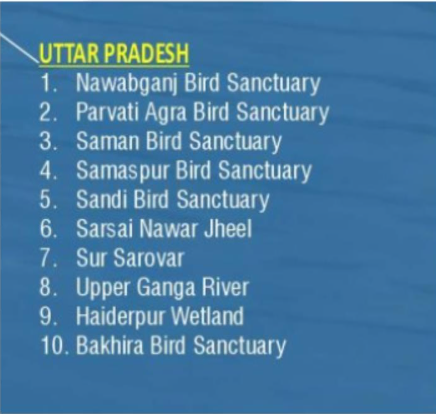
Uttar Pradesh is home to 1,33,434 wetlands, covering 5.16% of the State’s total geographical area. The state has ten Ramsar Sites, including the first Ramsar Site ‘Upper Ganga River’ to the latest ‘Haiderpur Wetland’. UP has the second-largest number of Ramsar Sites after Tamil Nadu. Parvati Arga Bird Sanctuary is one of the largest wetlands
in the natural floodplain area, providing shelter to over a lakh birds. This wetland is rich in vegetation and biodiversity. Under MoEFCC’s National Aquatic Ecosystem Conservation Plan, 13 wetlands are being conserved in UP. The State Wetland Management Committee of Uttar Pradesh has instructed relevant departments to identify and protect important wetlands at the district level.
- Legal Frameworks: The Wetlands (Conservation and Management) Rules, 2010 & 2017 mandate wetland demarcation and protection. The State Wetland Authority oversees conservation.
- Mapping & Identification: District-level wetland authorities were established, but mapping is still incomplete, delaying conservation efforts.
- Biodiversity Protection: The Wildlife Protection Act, 1972, and Forest Conservation Act, 1980, help safeguard wetlands within protected areas.
- Ramsar Sites: 10 wetlands in Uttar Pradesh are Ramsar-listed, ensuring protection under international conventions.
- Community Involvement: Initiatives promote local participation in conservation to reduce encroachments.
Conclusion
Despite legal measures, wetlands continue to degrade due to administrative delays. Stronger implementation and awareness campaigns are needed to ensure their long-term protection.



